موبایل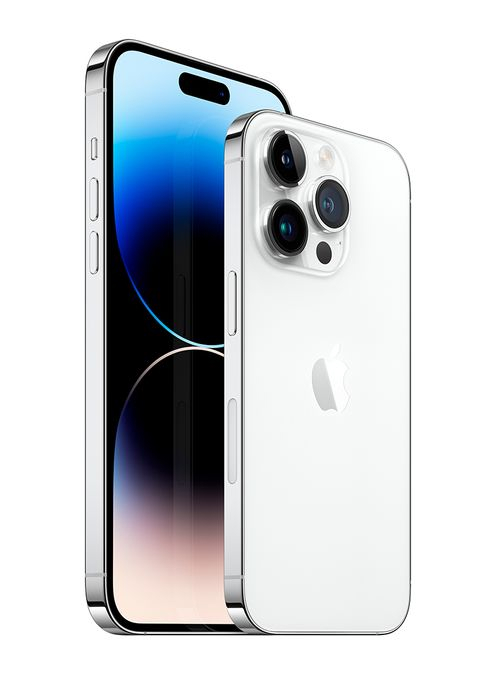
 تبلت
تبلت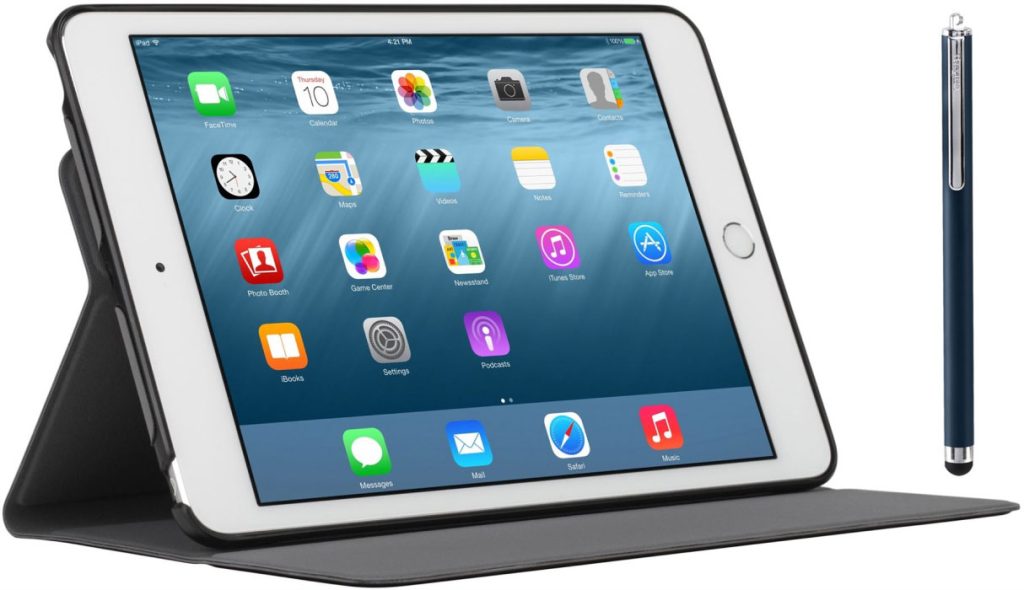


Upon stepping through the virtual doors of Glitchspin Casino, one of the first and most important decisions you will make concerns the way you transfer your funds glitchspincasino.eu. The ideal banking method handles more than just transferring deposits and withdrawals back and forth; it shapes your whole rhythm of play, your feeling of security, and how fast you can enjoy a win in the real world. We have devoted countless hours examining the details of payment technology to understand what truly matters to players who seek frictionless access to numerous slots, live dealer tables, and instant-win games. In this thorough exploration, we are going to dissect every component of casino banking so you can choose your ideal rail with total confidence, understanding precisely what happens once you click confirm.
How Your Payment Gateway Defines the Entire Experience
As soon as you pick Visa, a cryptocurrency wallet, or any e-wallet, you are not just selecting a logo; you are choosing a specific chain of verification, encryption, and settlement logic. Every gateway possesses its own tempo. A traditional bank card might route your transaction through an acquiring bank, a card scheme, and your issuing bank before the casino ledger even blinks, whereas a crypto transaction broadcasts directly to a decentralized network and waits for confirmations. Grasping this mechanical difference is empowering because it explains why some deposits reach your balance before you finish your coffee, while others test your patience. At Glitchspin Casino, we integrate multiple gateway architectures precisely so you can pick the tempo that matches your mood.
The gateway also controls how your sensitive information is stored. Modern payment rails use tokenization, a process that replaces your raw card number with a one-time cryptographic stand-in. This means even if a malicious actor intercepted the data stream, they would capture useless tokens rather than your actual banking details. When you deposit at a licensed platform, the tokenization layer is typically handled by PCI-DSS compliant intermediaries, so the casino itself never stores your full Primary Account Number. Understanding this lets you breathe easier during every session. We believe player education around tokenization, 3D Secure challenges, and biometric approvals changes a en.wikipedia.org routine deposit into an informed act of self-protection.
Speed is the metric everyone mentions first, but consistency matters far more than a single fast transfer. A gateway that processes deposits in ten seconds but frequently initiates manual security audits for withdrawals is not truly fast; it is unbalanced. The complete experience includes uniform velocity in both directions, transparent fee structures, and responsive support when a transaction enters a pending state. We encourage every player to try a method’s round-trip performance with a small amount before committing a larger bankroll, because firsthand experience reveals the subtle friction that no spec sheet will ever reveal.
Prepaid vouchers and Voucher-Based Gateways
Prepaid options like Paysafecard are based on a elegantly simple principle: you pay cash for a sixteen-digit PIN at many retail points, then you redeem that PIN online without ever disclosing a bank account or a credit line. This completely air-gapped method appeals to players who value absolute anonymity of funding source, to those who lack a credit card, and to anyone who seeks a firm budget boundary. You are unable to overspend a prepaid voucher because its value is finite the moment the retail receipt prints. At Glitchspin Casino, Paysafecard deposits are processed in real time, and you can combine multiple PINs to reach a desired deposit amount, which provides you with surprising flexibility despite the offline origins of each voucher.
The main limitation of voucher systems is found in withdrawals, which are not natively supported by the prepaid infrastructure. You can use Paysafecard, but you must choose an alternative method such as a bank account or e-wallet when you wish to pull funds out. This asymmetrical structure is not a casino restriction; it is inherent to how prepaid instruments are governed and designed. We consistently explain this clearly during the deposit flow so that no player completes a large session only to discover they have not yet chosen a withdrawal rail. The smart workflow is to establish your withdrawal method before your first deposit, treating it as part of the account on-boarding rather than an afterthought.
There is also an emerging class of voucher-like gateways that convert cash deposits through partner apps. These services let you deposit cash at a convenience store, scan a barcode, and watch casino credits appear within minutes. They bridge the gap between physical cash and digital gaming without the multi-day lag of a bank transfer. The fees on these services fluctuate significantly by geography and partner network, so we suggest a quick audit of the total cost relative to the deposit amount. In many cases, the speed and privacy advantages outweigh the premium, especially for players who manage their entertainment budget primarily in physical currency.
E-Wallets and the Growth of Effortless Transfers
Digital wallets have transformed the rules of casino banking by offering a privacy-preserving buffer between your bank and your play. When you load a Skrill, Neteller, or ecoPayz account and use it at Glitchspin Casino, the casino views only your wallet ID and transaction hash, not your underlying bank statements or credit line. This protective layer is especially beneficial for players who opt to keep their recreational spending separate from their primary financial records. Beyond privacy, wallets achieve what no card can: symmetrical speed. A digital wallet withdrawal often settles in under eight hours, and in many cases within minutes, because the funds travel between two accounts on the same closed-loop system rather than traversing the open banking grid.
We have seen that experienced players regard their e-wallet as a dedicated gaming treasury. They supply it with a weekly budget and avoid the temptation to top it up impulsively, turning the wallet’s balance into a natural responsible gaming tool. This approach works beautifully because once the wallet is empty, the session ends. The psychological barrier of accessing a separate wallet app and consciously starting a transfer adds a cooling-off moment that a saved-card one-click deposit cannot match. When we speak with players who have maintained healthy gambling habits for years, a majority point to their e-wallet workflow as a keystone of their strategy.
Fees are the dimension where you must read the fine print with eagle-eyed focus. Most digital wallets provide free deposits to casinos but levy a modest percentage or flat fee for withdrawals or for converting balances back into fiat currency. These charges are almost always the wallet provider’s cost, not the casino’s surcharge. At Glitchspin Casino, we arrange with wallet partners to keep pass-through costs at the lower end of industry norms, but we still advise you to check the latest fee schedule on your wallet dashboard before starting a large cashout. Some wallets also offer VIP tiers that reduce fees and raise transaction limits for active users, which can be a meaningful perk if you gamble regularly.

Understanding Processing Times, Cutoffs, and Pending States
The timeframe of a casino transaction is rarely a single straight line; it is a sequence of stages that each carry their own typical duration. A deposit typically moves through initiation, gateway authorization, fraud screening, and balance credit. At Glitchspin Casino, the fraud screening layer introduces mere milliseconds because we run pre-trained models that evaluate transaction risk without human intervention for the vast majority of deposits. The critical bottleneck lies almost always on the payment gateway side or the issuing bank, not on the casino’s internal ledger. Withdrawals add extra stages: internal review, compliance clearance, gateway push, and beneficiary bank settlement. Understanding this pipeline helps you set realistic expectations rather than refreshing your balance every thirty seconds.
Cutoff times are the hidden scheduling logic that controls when your withdrawal actually begins its journey. If a casino processes withdrawals in batch runs at 09:00 and 17:00 UTC, a request submitted at 17:05 will sit idle until the next morning. This is not a delay tactic; it is standard treasury management that reduces operational risk. We publish our processing windows transparently and recommend submitting withdrawal requests early in the day. Crypto withdrawals often bypass batch schedules because on-chain settlement is always-on, but even crypto cashouts may pass through a manual security check for amounts above certain thresholds. These checks are a sign of custodial diligence, not inefficiency.
A pending status is the most misunderstood state in casino banking. When your withdrawal shows as pending, it means the platform’s internal checks have begun but have not concluded. This period allows the payments team to verify that no bonus abuse, identity gap, or irregular wagering pattern is attached to the request. Most pending periods resolve within a few hours to one business day on a well-run platform. If a withdrawal remains pending beyond the stated window, it almost always indicates a document verification step that needs your action, such as uploading a recent utility bill or confirming a wallet address. Proactive account verification before you request a large withdrawal will keep you out of prolonged pending states.
Smartphone-Friendly Payment Flows and Anytime Banking
Over sixty percent of casino sessions now begin on a smartphone screen, which makes mobile payment design a primary concern rather than a secondary feature. Glitchspin Casino has put resources heavily in responsive payment interfaces that compress the desktop deposit flow into a thumb-friendly vertical stack without compromising any critical security element. Biometric authentication, which we touched on earlier, becomes even more impactful on mobile because a fingerprint or face scan substitutes for the tedious manual entry of a CVV or a 3D Secure passcode. In practice, a mobile deposit on a modern device can be finished in under fifteen seconds from intent to confirmation, using a chain that includes Apple Pay, Google Pay, or a native banking app prompt.
QR-code-based payments represent the next evolution of mobile casino banking. Instead of typing a wallet address or entering card digits, you scan a QR code with your camera, confirm the amount, and authorize with your device’s lock-screen credential. This flow eliminates address-poisoning attacks where malware swaps a copied crypto address with an attacker-owned address. When you scan a QR code generated directly by the casino cashier, you are creating a cryptographically secure, human-verifiable link between the platform and your wallet. We generate QR codes at high resolution and with embedded logo marks so you can visually confirm the code belongs to the platform before you authorize the push payment.
Cellular network reliability brings a variable that desktop players rarely consider. If you are depositing from a moving train or a basement with weak signal, a transaction can time out and leave your payment in an ambiguous state. Our payment recovery system catches these edge cases and automatically verifies the transaction status with the gateway, sparing you the need to contact support. Still, we recommend initiating mobile deposits when you have at least three bars of stable connection, because a clean handshake on the first attempt is always faster than any repair procedure. This simple habit will erase nearly all mobile-specific banking frustration.
Standard Credit and Debit Cards in the Virtual Casino World
Visa and Mastercard stay the bedrock of online casino banking, and their longevity is no accident. When you deposit with a debit card, you are relying on a planetary network that processes trillions of dollars every day. Casinos like Glitchspin Casino connect to this network through payment processors that focus on high-risk verticals, meaning your transaction experiences additional compliance checks that a typical e-commerce purchase does not. This extra scrutiny is actually a sign of a well-run operation; it proves that the acquirer is enforcing anti-money laundering protocols and card scheme mandates rather than taking shortcuts. We often tell players that a declined casino card payment is rarely a funds issue and almost always a compliance flag that resolves quickly with a call to the issuing bank.
The user experience with plastic is characterized by its universal familiarity. You have already memorized the flow: enter your name exactly as embossed on the card, populate the sixteen-digit Primary Account Number, add expiry and CVV, then wait for a 3D Secure push notification. The 3D Secure 2.0 protocol merits special recognition because it has transformed from clunky password pop-ups into seamless biometric approvals on your banking app. When you scan your fingerprint to authorize a deposit, you are completing a multi-factor authentication loop that connects your identity, your device, and the transaction amount into a cryptographically signed package that even sophisticated phishing attacks cannot easily break apart.
Withdrawal dynamics for cards differ sharply from deposits. While you can fund your balance almost instantly, sending money back to Visa or Mastercard can take between one and five business days according to the issuing bank’s batch processing schedule. This discrepancy surprises newcomers. We recommend treating your card as your primary inbound rail and pairing it with a faster outbound method such as an e-wallet or crypto address. Keep in mind that some issuers still stop gambling-related credits, a practice rooted in legacy risk policies rather than current regulatory requirements. Glitchspin Casino clearly indicates any known issuer restrictions during the withdrawal setup process so you prevent the frustration of a rejected credit down the line.
Bank Wires and Wire Rails for High Rollers
Wire transfers hold a special place: they are without equal for sheer transaction size but trade speed for that ability. When you start a SEPA transfer in Europe or an ACH push in supported banking networks, you are using a settlement system designed for high-value commercial transactions, not micro-purchases. The real-world effect is that a bank transfer deposit might take a few working days to show up in your casino balance, but the maximums are often ten to fifty times higher than what a debit card can handle. We serve players who view casino gaming as a major leisure activity, and for them, moving four-figure or five-figure sums in a single organized transfer is a must-have that only bank wires can meet.
The regulatory framework surrounding wire transfers is the most extensive in the payment ecosystem. Every bank transfer into a casino account starts a chain of SWIFT or SEPA messages that contain sender name, account number, and sometimes physical address. Compliance algorithms examine these data points against sanctions lists and transaction pattern algorithms. This is not something to fear; it is a reason to prepare. Make sure the name on your casino account exactly matches the name on your bank account, down to the middle initial, because a mismatch is the primary reason for a wire deposit being put on hold. At Glitchspin Casino, our payments team resolves mismatches quickly, but the delay is completely preventable with proper account setup.
Withdrawals via bank transfer are often the preferred exit strategy even for players who deposited with other methods. The logic is straightforward: you want your winnings to land directly in your primary bank account where they can accrue interest, settle payments, or fund your next vacation. A wire withdrawal from a legal casino carries a proper description on your bank statement, typically a corporate entity name rather than the customer brand. Before you initiate a large wire withdrawal, confirm with your bank that they do not charge incoming wire fees, which can quietly cut a percentage off your payout. Many digital banks now offer no-cost incoming transfers, a trend that has made bank transfer cashouts more economical than they were just five years ago.
Protection System Underlying Every Deposit Button
Each time you press the deposit button at Glitchspin Casino, you invoke a layered security apparatus that most players never see. TLS 1.3 encryption protects the transport layer, preventing any intermediary from intercepting your payment payload. Inside that encrypted channel, the cashier system communicates with payment gateways through digitally signed API calls that resist replay attacks. The platform itself operates behind a Web Application Firewall calibrated to casino-specific threat patterns, such as credential stuffing and bonus abuse scripts. We provide these details not to burden you with jargon but to emphasize that casino banking security is not a single lock; it is a layered castle of defenses that have been proven against the most creative adversaries in cyberspace.
Two-factor authentication for payment actions is emerging as a regulatory expectation across licensed jurisdictions, and we have integrated it as a standard rather than an optional extra. When you bind an authenticator app or a hardware security key to your casino account, high-value payment operations can initiate a second-factor challenge even if your session is already logged in. This protects you in the nightmare scenario where an attacker has breached your account credentials but does not have your physical device. We strongly recommend TOTP-based authenticator apps over SMS codes because SIM-swap attacks have rendered SMS-based 2FA untrustworthy in targeted incidents.
Account-level security hygiene is not the casino’s sole responsibility; it is a joint duty. Use a password specific to your casino account, created by a password manager with at least sixteen characters of entropy. Enable login notifications so you get an email or push alert whenever a new device authenticates. Regularly review your linked payment methods and unlink any card or wallet you no longer use. These habits form a personal security perimeter that reinforces the platform’s own armor. A deposit becomes a safe deposit only when both sides of the transaction, the player and the platform, honor their half of the security contract.
Crypto Payments and Public Ledger Transparency
BTC, Ethereum (ETH), Litecoin, and Tether (USDT) have stormed into the casino banking discussion with a guarantee that no legacy rail can duplicate: fully P2P settlement without middlemen who can slow down, restrict, or reverse a transaction. When you send Bitcoin at Glitchspin Casino, your transaction propagates to nodes spread across every region, and within ten to sixty minutes the network attains probabilistic settlement. This indicates your payment is mathematically permanent, eliminating chargeback risk from the calculation and permitting the casino to execute withdrawals at paces that make traditional banking look glacial. We are especially keen about the Lightning Network addition for Bitcoin transactions, where payment routes enable near-instant finalization with negligible fees.
On-chain transparency is a two-sided learning every crypto user must understand. Your payment address and transaction ID form a enduring public log on the blockchain explorer, viewable by anyone. The casino platform itself connects your transfer to your account under a pseudonym, but the raw payment is unalterable. This is not a security vulnerability; it is core design. The takeaway here is to use address management. Create a fresh deposit address for each important transfer when the platform enables it, and avoid reusing addresses across different platforms. We provide unique per-user wallet addresses to preserve segregation, but your overall wallet activity stays a public record, so treat your casino address with the same care you apply to your social media privacy preferences.
Stable coins like USDT and USDC have turned into the unexpected champion of casino banking because they address the volatility problem that kept many users away from crypto transactions. There is little psychological resistance in transferring a token linked 1:1 to the US dollar, because you do not have to calculate whether your funds has increased or fallen during the transaction window. Glitchspin Casino offers several ERC-20 and TRC-20 stablecoin variants, and we generally advise TRC-20 channels for their lower gas fees compared to Ethereum mainnet. Keep a small amount of the network’s native token in your wallet for gas, because a deposit effort with insufficient gas will stall and cause unnecessary support requests.
Časté dotazy
Jaký způsob platby gives the quickest withdrawals at online casinos?
Kryptoměna and select digital wallets regularly deliver the swiftest withdrawal times in the industry. Bitcoin and Ethereum withdrawals typically settle within an hour, while e-wallets like Skrill and Neteller often process within eight hours or less. The speed advantage stems from closed-loop networks and blockchain settlement that bypass the batch processing cycles of traditional banking. Debit and credit card withdrawals, by contrast, usually require one to five business days due to issuer clearing intervals.
Is my card information secure when I deposit at a licensed casino?
Yes, on a properly licensed platform your card details are secured by multiple defensive layers. PCI-DSS compliant payment gateways use tokenization to replace your raw card number with a one-time cryptographic token, meaning the casino never stores your Primary Account Number. TLS encryption shields the data during transit, and 3D Secure 2.0 adds biometric or app-based verification. These combined protections make modern casino card deposits safer than many everyday retail purchases.
What caused my casino deposit to be declined even though I have enough funds?
A rejection rarely suggests inadequate funds. Far more often, your issuing bank has marked the transaction under its gambling-specific risk policies or its automated anti-fraud engine has activated on an unfamiliar merchant category code. Some banks restrict gambling transactions by default, demanding you to explicitly approve them via a phone call or banking app toggle. A quick call to your bank’s fraud department generally resolves such blocks right away.
Will casinos apply fees for deposits or withdrawals?
Reliable casinos generally cover deposit fees, meaning you receive the full amount you sent. Withdrawal fees vary by method: crypto withdrawals involve network gas fees that are inevitable, while e-wallets may impose a small percentage. The casino itself often pays for one or two free withdrawals per month before passing through payment rail costs. Always check the cashier page’s fee schedule before starting a transaction, as terms can be revised.
Is it possible to add money with one method and cash out with a different one?
This is truly the suggested strategy for optimizing both speed and privacy. You might deposit instantly with a debit card and then withdraw winnings to an e-wallet or crypto address for faster settlement. Most licensed casinos allow mixed-method flows as long as both instruments pass identity verification. The key rule is that the withdrawal method must be registered in your name to prevent third-party money laundering redirection.
What constitutes a pending withdrawal and how long should it last?
A pending withdrawal indicates the casino’s internal review has begun but is not yet complete. This stage allows the payments team to verify wagering requirements, identity documents, and anti-fraud indicators. On a well-operated platform, the pending window normally lasts from a few hours to one business day. If your withdrawal remains pending beyond the stated window, check for a verification request requiring your action, such as a missing document upload.
What is the way to set a responsible deposit limit for myself?
Access the safe gambling section within your account dashboard, where you will discover tools to configure daily, weekly, or monthly deposit ceilings. Once a limit is set, the cashier system instantly prevents any effort to exceed it, generating a cooling-off moment. Limits can normally be lowered instantly, while increases may include a twenty-four-hour deliberate delay. This asymmetry is designed to encourage thoughtful budgeting instead of impulsive adjustments.